Cómo hace vídeo Fable 5.2
Generar vídeo con Fable 5.2 significa pedirle una escena o un corto y dejar que lo construya entero como un programa: los modelos, la cámara, la iluminación y a menudo la música. Algunos autores lo renderizan a MP4; otros comparten la escena como una página que puedes abrir y recorrer.
- El anime de 90 segundos de 0kncn se montó plano a plano en Blender desde Python, con banda sonora escrita en numpy.
- El barco dorado de Marcel es Three.js puro, sin Blender ni modelos externos: unos 38 minutos y 17 $ con effort medio.
- La Estambul de Peter Gostev, la más popular de todas, se hizo con Fable 5.2 Max por unos 46 $.
- El corto del ovni de Dante salió de una sola frase, con three.js y Remotion, sin texturas ni audio de archivo.
Cómo hacer uno en Claude Code
Abre Claude Code con Fable 5.2
Fable 5.2 requiere un plan Pro o superior, o acceso por API. Para una escena que compartir como página basta una carpeta vacía; para Blender, instálalo para que Fable lo maneje desde Python.
mkdir my-film && cd my-film
claude --model claude-fable-5-2
Describe la escena, o el corto plano a plano
Una frase vale ("make me a 30 second video of a UFO visiting Area 51 and greeting humans, ultra detailed, cinematic lighting"); los prompts largos y precisos, como el de París 1888 más abajo, te dan más control.
Pídele que lo renderice, o que lo deje en vivo
Pide un MP4 con una resolución y fotogramas por segundo concretos, o una sola página HTML que se abra en el navegador y se pueda compartir.
Cortos y animación
Películas cortas con cámara, historia o banda sonora.
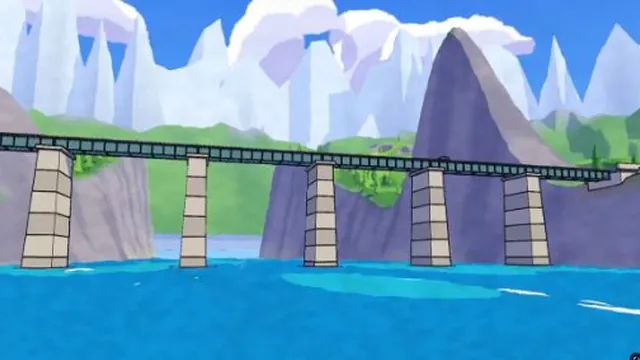
Un corto de anime de 90 segundos: una locomotora de vapor se convierte en robot
0kncn (@0kncn) · 409 me gusta · 69,5 mil visualizaciones
Anime 2D con aspecto dibujado a mano a partir de un prompt: Fable montó cada plano en Blender desde Python, lo renderizó y entintó cada fotograma en una segunda pasada, y escribió la música nota a nota con numpy.
Ver el prompt (tal como lo compartió el autor)
Create a 2D anime short. It must look completely like real Japanese anime, as if it were taken directly from a finished theatrical anime film. This is traditional-looking, hand-drawn 2D anime, not a 3D animation, a moving illustration, or a stylized web graphic.

Build everything in Blender from Python, render it in Eevee, then ink and paint every frame in a second pass. Deliver one 1920x1080, 24 fps MP4 with a synthesized soundtrack. Use any tools, libraries, references, guides, literally anything, as long as the final result looks 100% like hand-drawn 2D anime.

Use theatrical anime as the art style reference for the design, line work, painted backgrounds, color and atmosphere. The film is 90 seconds long (2160 frames), in 42 shots. Its hero is a steam locomotive that transforms into a robot. No people appear in the film.

HERO
No. 9, a 1940s 2-8-2 freight locomotive with a four-axle tender, 23 m long, asleep for decades in a mountain engine shed: matte black boiler with rust runs, faded red wheel centres and buffer beam, brass number plate "9", one large headlamp, two amber marker lamps, moss on the running boards, ivy through the cab windows, and a stork's nest on the cab roof. As a robot it stands 21 m tall with its shoulders at 17 m. It is an original design, not a character from any existing series. It moves on twos, slow and heavy. Its wheels never slip and its feet never slide.

TRANSFORM
One transformation, at full speed, 120 frames, in five stages of 24 frames. Every part is rigid: nothing stretches, nothing vanishes, nothing appears. Each part travels on a hinge or a slide you can see.
1. Legs: the tender uncouples, splits lengthwise and swings down; its two bogies lock as feet, the coal stays in bunkers on the calves.
2. Hips: the cab drops and widens into the pelvis; the trailing truck folds onto the lower back.
3. Torso: the boiler tilts upright, firebox at the waist, smokebox at the top; the chimney and steam dome end on the upper back and keep venting.
4. Arms: the running boards swing out with the cylinders as shoulders, the piston and connecting rods as forearms, and hands with three fingers and a thumb unfolding from the valve gear; the front driving wheels ride up as shoulder discs, the rear ones fold to hips and knees.
5. Head: the smokebox door hinges forward as the chest plate with the headlamp at its centre; a riveted helmet rises from the smokebox with one dark visor slit and the two marker lamps as amber eyes; the cowcatcher folds up as a collar.
The cab roof panel rides up to the right shoulder and carries the stork's nest, never tilted more than 10 degrees.
Stages 1-3 happen on the rails, with the first strides landing on the ballast either side of the track. Stages 4-5 happen in the air.

WORLD
A single-track mountain railway at real scale. At the top, an ore mine with a loading bunker and a rake of twelve four-wheel hopper wagons. The line descends through larch forest and a short rock tunnel to a viaduct: seven 18 m steel girder spans on stone piers, 126 m long, the deck 17 m above a turquoise meltwater river 3 m deep. Beyond it, a small station: a stone engine shed, a water tower, a semaphore signal with an alarm bell, a signal box, a siding ending in a sand drag. Snow peaks behind, a cliff face above the viaduct, telegraph poles along the whole line.

STORY
A clear spring morning in the valley. Meltwater loosens the cliff: a rockfall hits the middle pier of the viaduct, the pier collapses into the river and the two girders it carried sag into a V, held only by the rails. Up at the mine the shock snaps a coupling and the twelve loaded wagons start to roll downhill, unmanned. At the station the semaphore drops to danger and the bell rings. In the dark shed the firebox glows, the pressure needle climbs, the headlamp lights; the stork flies up. No. 9 bursts through the shed doors tearing ivy and rust, and charges up the grade with the wagons coming down the other side. On the approach it transforms at full speed, leaps from the abutment, lands crouched in the river, wades to the fallen pier, and lifts the sagging joint onto its shoulders and raised hands. The wagons hit the viaduct: it sinks 0.3 m as each one passes over and holds. The rake runs through the station into the sand drag and stops. No. 9 does not come back out. It locks its knees and stays as the new pier. The steam thins, the stork returns to its nest, the visor dims.

LIGHT
High-key anime light, never murky: a morning sun from the south-east, a saturated cobalt sky, white cumulus with lavender shadows, snow peaks with blue shadows, fresh green larch, a turquoise river with drawn white water. Light only changes with a cause you can see: rock dust dims the gorge for 3 seconds, steam whites out a frame, the firebox throws orange onto the shed walls. Cel light with hard shadows, gouache backgrounds, ink lines on every machine, rail and building, effects drawn on twos: steam as inked rolling shapes with a flat shadow tone, water as inked sheets with foam crowns, dust as drawn clouds, never particle mush.

SOUND
A synthesized orchestra on a 144 bpm grid: one beat is 10 frames, and every cut lands on a multiple of 5 frames. A hopeful theme on clarinet and horn, the collapse in E minor, a 12/8 chase with the exhaust chuff as percussion at four beats per wheel revolution, a heavy 3/4 for the hold with one low drum per wagon. 16 hits land exactly on the picture: the rockfall, the pier, the coupling, the signal arm, the shed doors, each transformation lock, the landing, the lift, the first and last wagon. The steam whistle is heard twice: once on waking, once on the hold.

FORMAT
Write the film as a Python story clock: one state per frame for every pose, camera, wheel angle, rod position, transformation part, wagon, effect and sound cue.

CHECKS
Before the final render a script tests every frame on the real meshes: no part of No. 9 goes through another part, in either form or at any frame of the transformation; the total volume of its parts is the same in both forms; every wheel on a rail turns exactly as far as it travels; planted feet do not move; No. 9 never goes through the track, the shed, the viaduct or the riverbed; the wagons stay on the rails and never touch each other except at the couplings; the camera never enters a mesh, the cliff or the water; nothing jumps between frames.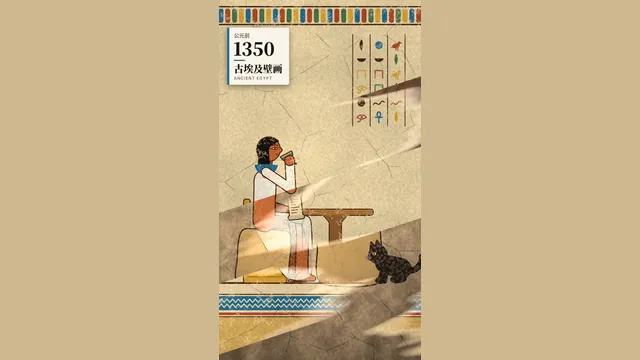
40.000 años de historia del arte en un prompt
Tommy618 · 315 me gusta
La misma persona y el mismo gato redibujados en cada época, de una pintura mural egipcia a Van Gogh, Mondrian, el pixel art y 2026. Unas 4.900 líneas de código, sin modelo de imagen.
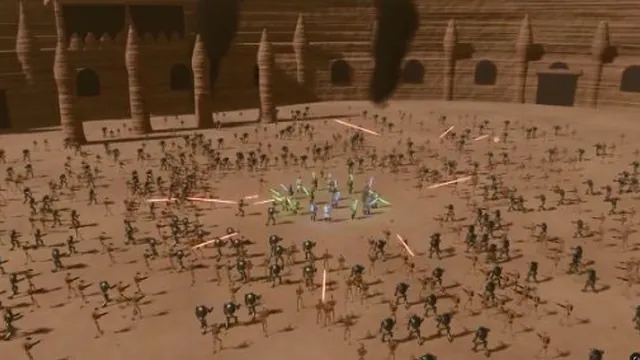
Una batalla de Star Wars construida en Blender
Aditya (@adityavg13) · 292 me gusta · 44,3 mil visualizaciones
La prueba de Blender que el autor pasa a cada modelo nuevo: más de mil droides, cañoneras y disparos láser en la arena. Un prompt, 1,5 horas con 20 minutos de render.
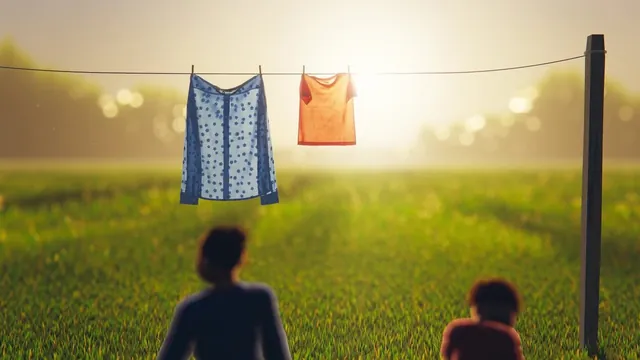
Ropa tendida a la luz de la tarde
Dan Fein (@dfeinition) · 210 me gusta · 8,3 mil visualizaciones
Dos personas miran camisas ondeando en un tendedero en un prado soleado. Los pliegues, la luz que atraviesa la tela, la cámara y el sonido son código.
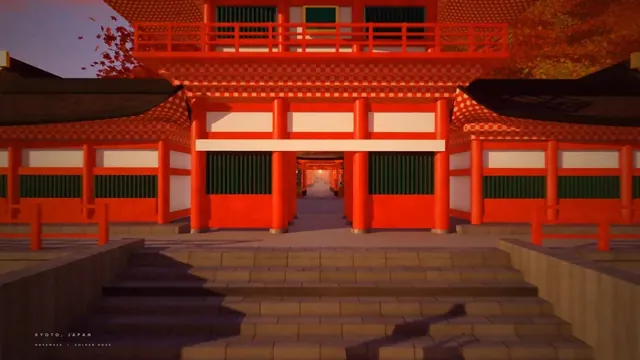
Un anuncio de viajes de Fushimi Inari en otoño
Peter Yang (@petergyang) · 83 me gusta · 10 mil visualizaciones
Veinte segundos del santuario de Kioto, un recorrido por el túnel de toriis rojos y un rótulo al atardecer, todo en código, música incluida.
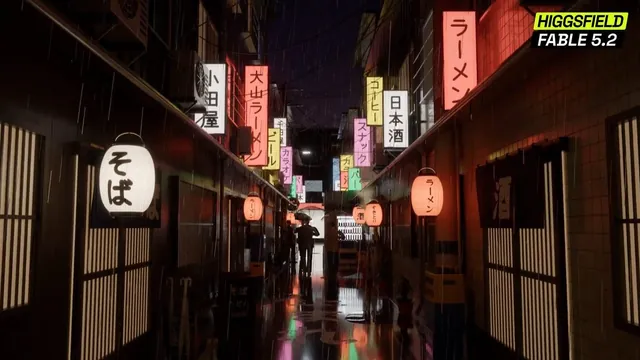
Un callejón de Tokio bajo la lluvia, sin modelo de vídeo
Higgsfield AI (@higgsfield_ai) · 68 me gusta · 11,2 mil visualizaciones
Lluvia, charcos y reflejos de neón, un espejo de esquina que refleja de verdad y carteles japoneses que se pueden leer. Publicado por Higgsfield.
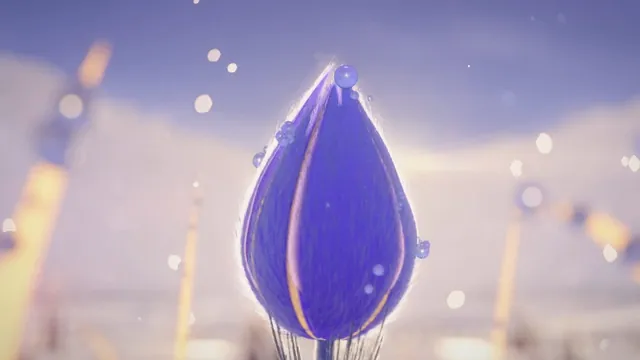
Un capullo de cristal y un vuelo sobre campos morados
每天懂点AI · 176 me gusta
Un capullo escarchado y luego un vuelo rasante sobre prados, picos nevados y campos de flores moradas. El autor dice que tardó media hora.

Un robot mascota que podrías construir en casa
Matt Shumer (@mattshumer_) · 151 me gusta · 138,4 mil visualizaciones
Matt Shumer pidió un robot que pudiera construir en su piso y recibió un pequeño robot mascota redondo que despierta, mueve el brazo y juega con una pelota.
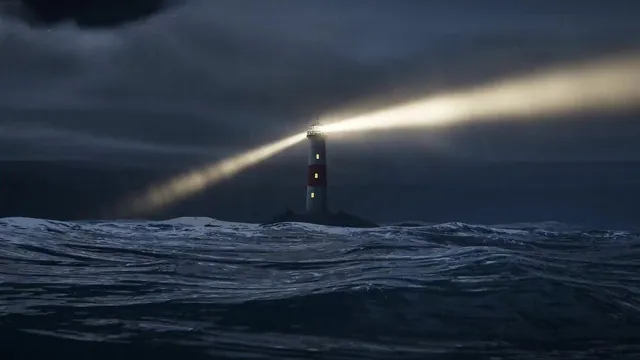
Un faro en la tormenta
rohit (@rohit3a) · 52 me gusta · 1,9 mil visualizaciones
Un haz de luz barre un mar nocturno agitado hasta que las nubes se abren alrededor de la luna. Con effort alto y sonido.
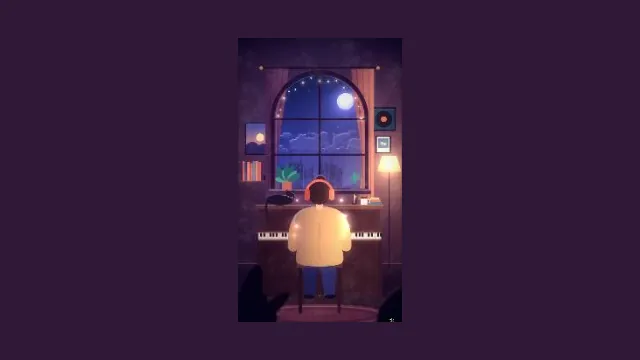
Un corto de 46 segundos sin una sola imagen generada
Cube (@cube__lol) · 14 me gusta · 624 visualizaciones
Un niño al piano: cada fotograma dibujado y cada nota tocada por código que escribió Fable, sin modelos de imagen ni de vídeo.
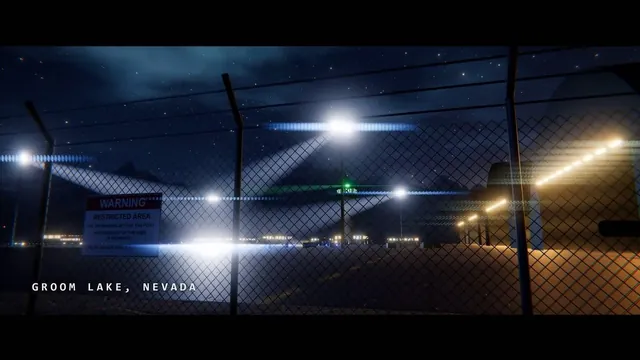
Un ovni aterriza en el Área 51
Dante (@danteeonsol) · 3 me gusta · 209 visualizaciones
Una película de cinco planos y 30 segundos en three.js y Remotion a partir de una frase: sin modelos importados, texturas ni audio de archivo, en 4K.
Ver el prompt (tal como lo compartió el autor)
make me a 30 second video of a UFO visiting Area 51 and greeting humans, ultra detailed, cinematic lighting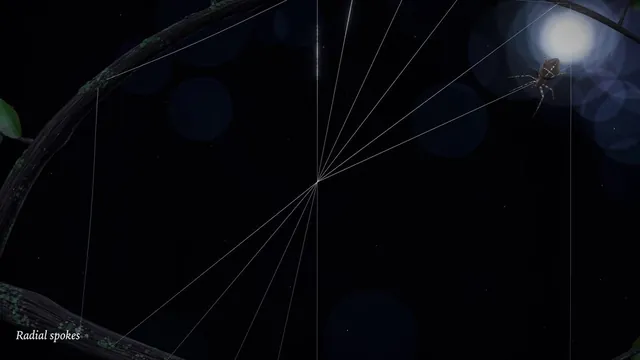
Una araña teje el logo de Claude en su red
sudoPhoeniX (@sudoPhoeniX) · 1 me gusta · 79 visualizaciones
Una araña a la luz de la luna teje su red paso a paso y, al amanecer, borda el logo de Claude en el centro.
Mundos 3D y dioramas
Ciudades, barcos e islas; varias son páginas en vivo que puedes recorrer.
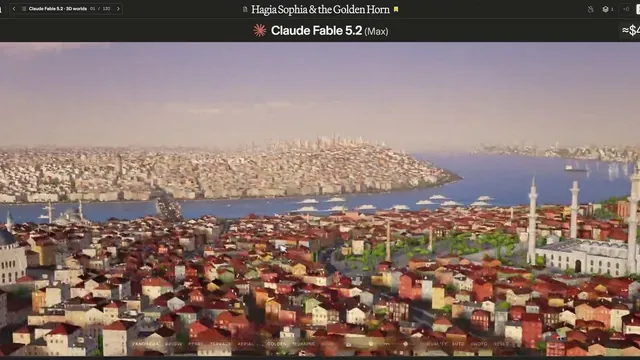
Estambul, construida a partir de un prompt
Peter Gostev (@petergostev) · 2,9 mil me gusta · 468,1 mil visualizaciones
La ciudad desde el aire: Santa Sofía y el Cuerno de Oro, ferris cruzando el Bósforo y el horizonte al atardecer. Fable 5.2 Max, unos 46 $.
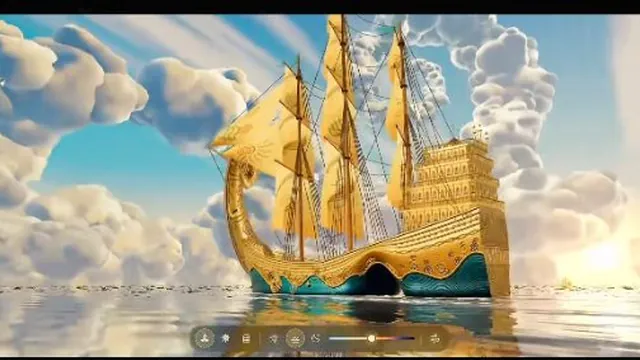
Auric Voyage: un barco dorado sobre las nubes
Marcel (@marcthecreatorr) · 111 me gusta · 4,8 mil visualizaciones
Un velero dorado sobre nubes volumétricas, con ciclo de día y noche y una cubierta a la que puedes subir. Solo Three.js, unos 38 minutos y 17 $.
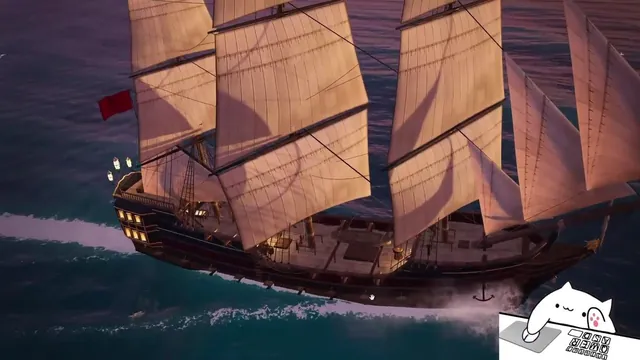
Un barco pirata navegando al atardecer
J A Z I I (@notjazii) · 110 me gusta · 4,7 mil visualizaciones
Un tres palos con estela, ventanas de camarote iluminadas y velas desplegadas. A la primera, unas 1,5 horas y 35 millones de tokens.
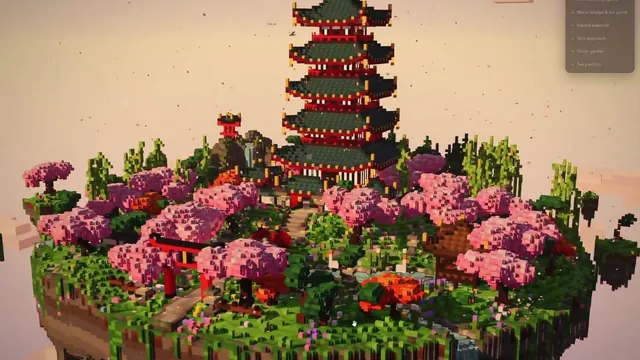
Una pagoda de vóxeles llena de detalles
Lumina (@LuminaBench) · 104 me gusta · 4,5 mil visualizaciones
Una isla flotante con una pagoda de cinco pisos, cerezos en flor, estanques y farolillos que se encienden de noche.
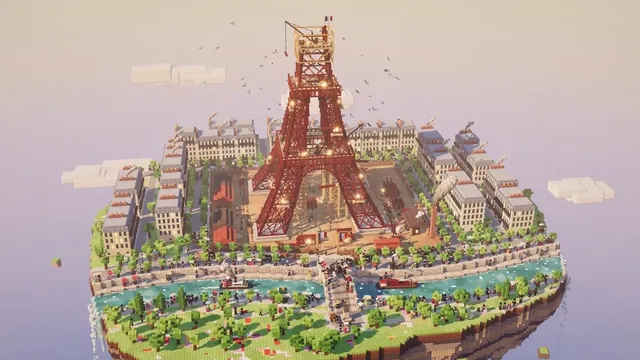
París en 1888, con la Torre Eiffel en obras
Rez (@RezAIT00) · 41 me gusta · 4,5 mil visualizaciones
Grúas que levantan vigas, remachadores entre chispas y un barco de vapor por el Sena, en una isla de vóxeles flotante. A la primera, con un prompt largo y preciso.
Ver el prompt (tal como lo compartió el autor)
Build a single self-contained three.js HTML page that renders a 14-second animation (1280x720, 30fps, deterministic: expose window.renderAt(t) so every frame can be captured). Scene: a floating voxel diorama island - Paris, 1888, the Eiffel Tower under construction. Everything is already moving on frame 1. Island: - floating chunk with layered rock underside, the Seine curving across the front with stone quays and an arched bridge - Champ de Mars: dirt work yard, stacks of iron girders, wooden sheds, a steam engine with a smoking chimney - around it: rows of Haussmann buildings with cream walls, grey zinc roofs, chimneys, tiny trees along the boulevards The tower (the hero): - dark reddish-brown wrought iron lattice made of thin voxel beams with real X-bracing, not solid blocks - four curved legs and the first platform finished, the second level half built, the top section only a skeleton - wooden scaffolding towers under the legs, small creeper cranes on the structure lifting girders on chains - glowing orange rivet sparks where workers hammer, small puffs of steam Life (hundreds of tiny voxel people, ~3 voxels tall): - riveting teams on every level with hammers swinging, workers walking along beams - girders hoisted by cranes swinging slowly into place - horse-drawn carts carrying iron across the yard, crowds of onlookers in 1880s clothes with top hats and parasols - a riverboat with a smoking funnel moving along the Seine, carriages crossing the bridge, pigeons circling the tower Camera and look: - wide view of the whole island, slow orbit (~25 degrees) with a gentle push-in toward the tower - warm late-afternoon sun, soft shadows, ambient occlusion, light haze, rounded voxels, ACES tone mapping, soft bloom on sparks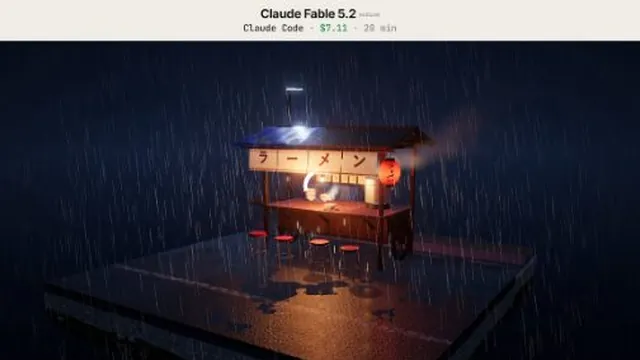
Un puesto de ramen en una noche lluviosa de Tokio
sprinntt (@sprinntt) · 3 me gusta · 1 mil visualizaciones
Un PROMPT.md, una carpeta vacía y ninguna edición manual, en 20 minutos y por 7 $. Pulsa T y la lluvia se convierte poco a poco en nieve.
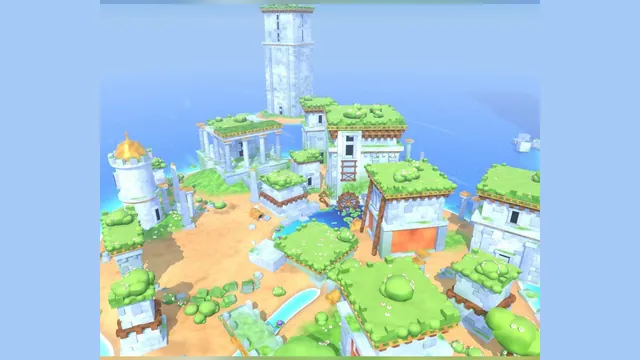
Una isla reconstruida en Blender a partir de una referencia
sweetretry · 85 me gusta
Hecha en Blender solo con código: 130 objetos, 1,14 millones de caras, sin texturas, una noria que gira y peces que nadan. Fable completó lo que la referencia no mostraba.
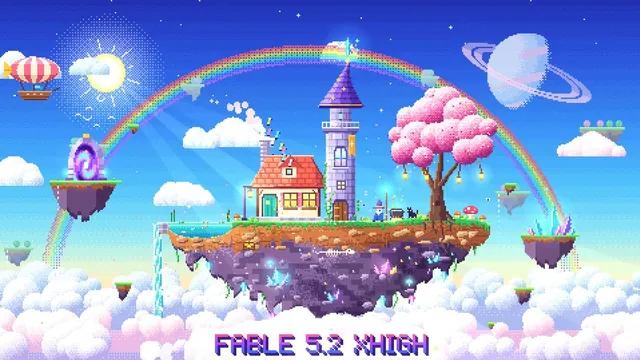
Una isla de píxeles flotante
JUMPERZ (@jumperz) · 75 me gusta · 3 mil visualizaciones
Una isla en pixel art que se repite en bucle, con torre de mago, cerezos, arcoíris y dirigibles. Un prompt con effort extra alto.
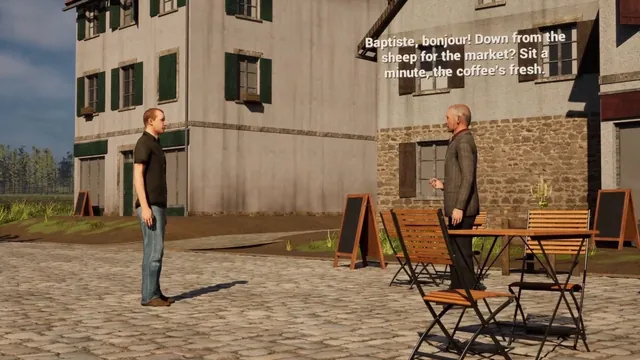
Un pueblo europeo donde cada personaje piensa
Matthew Berman (@MatthewBerman) · 61 me gusta · 5,4 mil visualizaciones
Un pueblo 3D cuyos habitantes piensan y hablan entre sí con IA, de la prueba de Fable 5.2 de Matthew Berman.
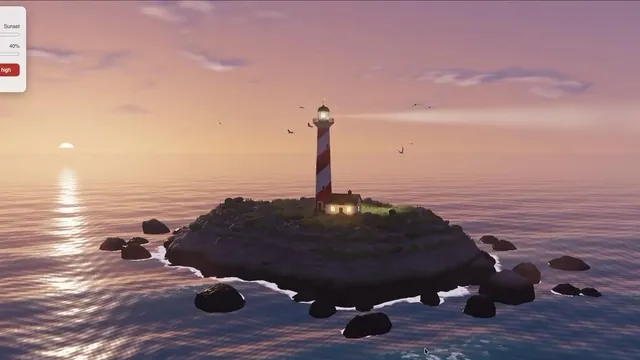
Un faro fotorrealista al atardecer
Not Harris (@viewsfrom02108) · 2 me gusta · 305 visualizaciones
El prompt de faro de siempre del autor, en Fable 5.2: un faro a rayas, un haz que barre y un mar en calma.
Webs y páginas interactivas
Landing pages y páginas de producto que se animan al desplazarte o hacer clic.
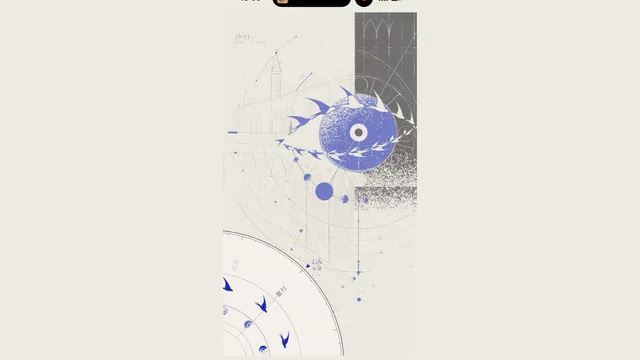
Una app de chat constructivista que cambia de forma
396 · 1,5 mil me gusta
La interfaz de una app de chat de compañía rediseñada en estilo constructivista: golondrinas, fases lunares, un ojo no humano y una escalera de caracol, con chats dibujados como mapas y cartas.
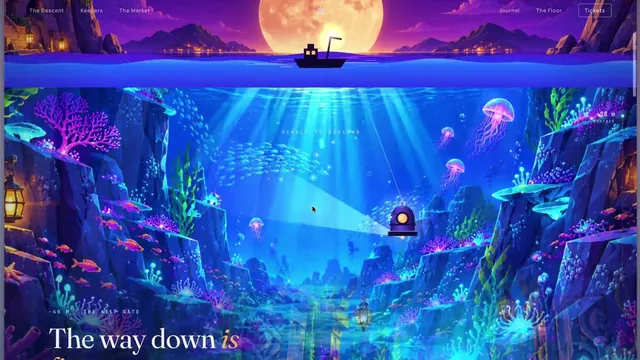
Abyssal: una landing page que baja hasta el fondo del mar
Pratzyy (@pratyushrungta) · 9 me gusta · 456 visualizaciones
Desplázate desde una superficie iluminada por la luna, entre medusas brillantes, hasta una ciudad de farolillos y un ojo gigante en la oscuridad. Con effort bajo.
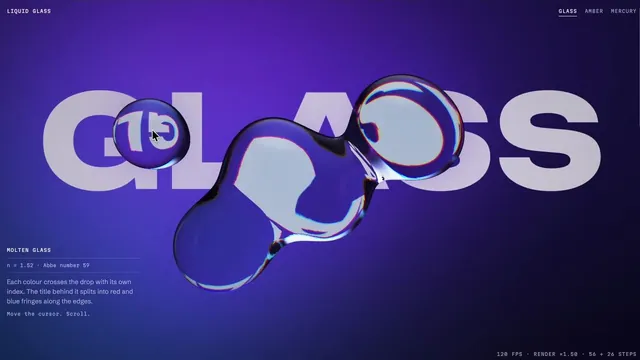
Tipografía de vidrio, ámbar y metal líquido
Iliyass (@ioTanjiro) · 6 me gusta · 282 visualizaciones
Gotas de vidrio, ámbar y metal líquido atraviesan titulares gigantes, cada material con su propia paleta.
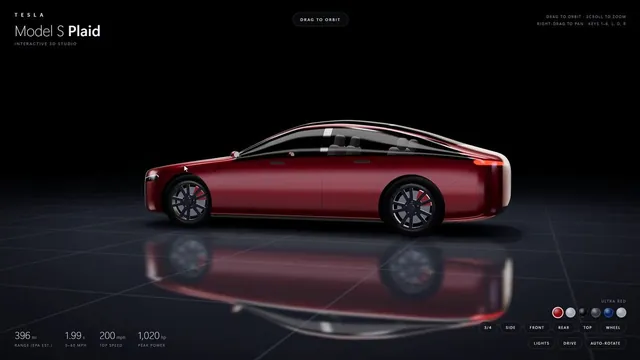
Un configurador de coches hecho con effort medio
Rez (@RezAIT00) · 3 me gusta · 598 visualizaciones
Gira alrededor de una berlina roja, cambia pintura y llantas, y pasa a una vista de salida con estelas de luz. Doce minutos.
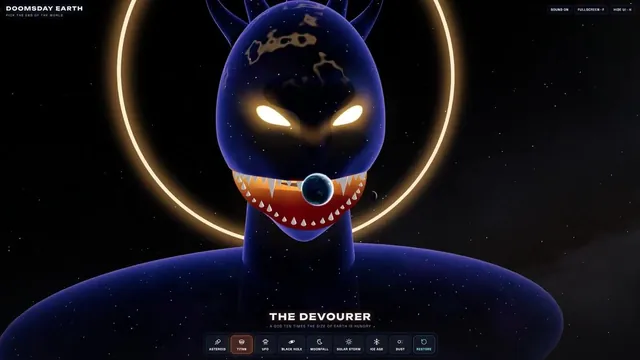
Doomsday Earth: ocho maneras de destruir el planeta
0xVe1vet (@0xVe1vet) · 162 visualizaciones
La Tierra con mapas reales de la NASA y luces de ciudades, y ocho formas de acabar con ella, de un asteroide a un dios que se la come como una manzana. A la primera.
Ciencia, espacio y datos
Galaxias, agujeros negros, virus y el fondo del mar, a menudo con datos reales.
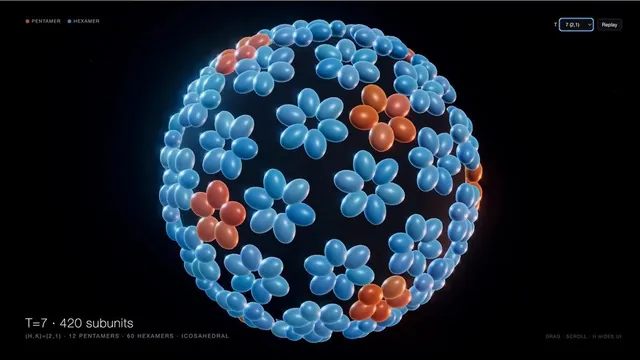
La cápside de un virus que se ensambla sola
Tekon Burns (@TekonBurns) · 55 me gusta · 3,8 mil visualizaciones
Un archivo HTML: 420 subunidades de proteína forman una cápside T=7, primero 12 pentámeros y luego 60 hexámeros, la geometría que usan los virus reales.
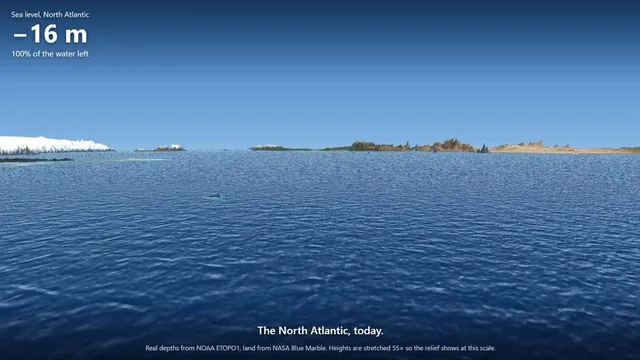
Cómo se ve el Atlántico sin agua
Gul Saeed Khattak (@Ldataengineer) · 4 me gusta · 2,3 mil visualizaciones
Datos reales del fondo marino de la NOAA en un sobrevuelo 3D mientras se vacía el océano: Gran Bretaña se une a Europa en segundos y aparece la dorsal mesoatlántica.
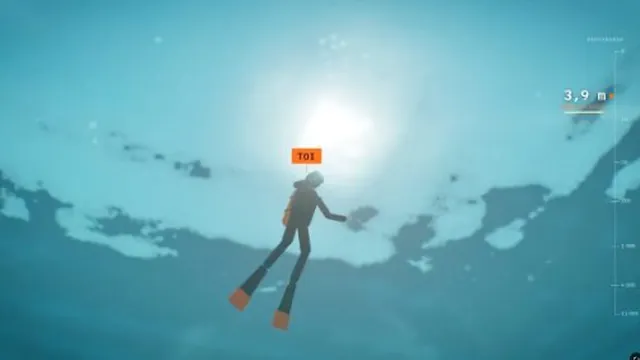
Una inmersión de la superficie a 40 metros
g_beyrouti (@g_beyrouti) · 1 me gusta · 94 visualizaciones
La luz, los bancos de peces y el haz de la linterna cambian con la profundidad, con un profundímetro al lado. Todo código.
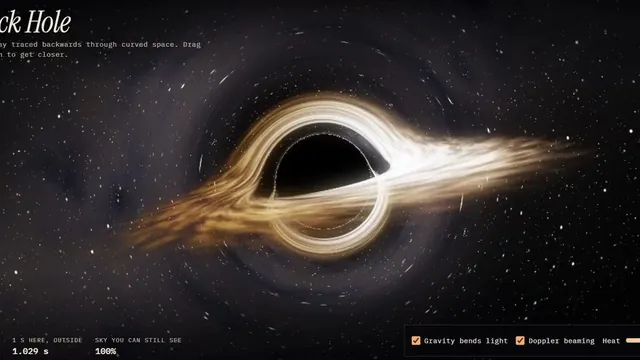
Un agujero negro de bolsillo
Paul Gegenyi (@paulgrowthlab) · 43 visualizaciones
Cuando le pidieron algo que se hiciera viral, Fable creó un agujero negro interactivo con un disco brillante curvado por la lente gravitatoria.
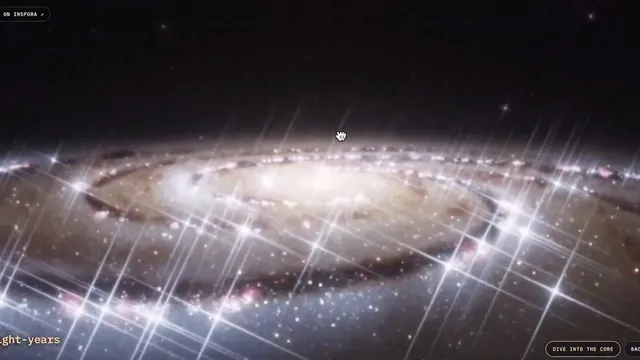
Vuela hacia una galaxia espiral
Marko Vineli (@handsher_NGU) · 24 me gusta · 1,6 mil visualizaciones
Empieza fuera de una galaxia espiral y entra volando, con un contador de años luz que baja. Unos 20 minutos de trabajo.
Más de Claude
La lista completa, con tres fotogramas por vídeo, está en GitHub: awesome-claude-fable-videos. Para juegos hechos con Fable 5.2, mira juegos con Claude Fable 5.2; para vídeos de lanzamiento y motion graphics con Opus 5.5, motion graphics con Opus 5.5. Lo que cambió en el modelo está en nuestra guía de Claude Fable 5.2.
Preguntas frecuentes
¿Claude Fable 5.2 puede generar vídeo?
No como lo hace un modelo de vídeo. Escribe código que dibuja cada fotograma, en Three.js, WebGL, Remotion o Blender, y lo renderiza a MP4 o lo ejecuta en vivo en el navegador. Por eso el texto, los logos y los detalles salen nítidos.
¿Qué herramientas usa?
Lo más habitual es Three.js o WebGL en un solo archivo HTML. Otros usaron Remotion para montajes de estilo cine, Blender manejado desde Python, y Python o numpy para la música.
¿Cuánto tarda y cuánto cuesta?
Desde unos 20 minutos y 7 $ (el puesto de ramen de Tokio) hasta 1,5 horas y 35 millones de tokens (el barco pirata) o unos 46 $ con Fable 5.2 Max (Estambul).
¿Puedo abrir estas escenas yo mismo?
Cuatro tienen una página en vivo enlazada en su tarjeta: el barco dorado, el barco pirata, el agujero negro y la galaxia. El resto se compartió en vídeo.
¿Fable 5.2 u Opus 5.5 para vídeo?
Se usan los dos. En lo que la gente publicó, Fable 5.2 se usó sobre todo para mundos 3D y cortos, y Opus 5.5 para vídeos de lanzamiento y motion graphics, que reunimos en motion graphics con Opus 5.5.
Cada publicación y prompt comprobado en X y Xiaohongshu el 11 y el 12 de noviembre de 2026; los me gusta y visualizaciones son los de esos días.